

Insurances
Contents
- Life Insurance
- Accident, Sickness & Unemployment Insurance
- Buildings Insurance
- Contents Insurance Cover
Life Insurance

What is Life Insurance?
Life Insurance pays a cash lump sum to your family and loved ones if you die, or are diagnosed with a specified critical illness (optional extra), during the course of the plan. Term Insurance is a form of life insurance where you choose the level and period of cover and sum assured remains the same throughout the period of the plan.
What does Life Insurance provide?
Life insurance provides vital financial protection to your family or dependents in the event of your early death.
How does Life Insurance work as Protection for my family?
If the major earner of the family dies, will you be able to pay any outstanding debts, or cover tax liabilities connected with the transfer of estates? Life insurance or term insurance is used to provide your family or dependent with protection by paying a lump sum on death.
What does Term Insurance mean?
The word term relates to the period of cover that normally relates to the length of your mortgage, or the time when children are growing up and expenses are high. Term insurance gives you financial protection if you die within the specified term. This could be from one month to 25 years. If you are alive at the end of the tern no payment is made and there is no surrender value. Meaning if you stop paying the premiums the cover ceases and there is no refund paid.
Can I get a regular income instead of a lump sum?
In simple terms yes, but the protection is called ‘family income benefit’ policy.
Are there different types of Term Life insurance?
Yes, there are different types of term insurance:
- Level term – the sum insured remains the same throughout the agreed term.
- Decreasing term – the sum insured reduces by a fixed amount each year.
- Family income benefit – If you need a regular income to be paid in the event of your early death, the income can be paid monthly, quarterly or yearly.
Do I need Life Insurance?
The ability to earn income can be considered your family’s most valuable asset because your income allows you to obtain other assets, particularly the necessities of life and of course the creature comforts.
However as we know, the ability to earn an income is not guaranteed. Yet the need for income may continue for those who were financially dependent upon you. Consequently, your need for life insurance and the amount will depend upon your personal and financial circumstances.
People who should consider life insurance
If any of the following statements apply to you, you probably do need to consider life insurance.
- You have a spouse
- You have dependent children
- You have an aging parent or disabled relative who depends on you for support
- You have another loved one that you wish to provide for
- You have business or estate planning needs that life insurance can satisfy
- Your retirement pension and savings are not enough to insure your loved ones future against a rising cost of living<
The facts and figures of life
With the ever increasing cost of housing, ask yourself this simple question;
"Could the lowest earner in your family afford to pay all your current bills by themselves?"
We’re always being told that the old are getting older; unfortunately the figures below clearly demonstrate that not all of us will be joining that statistic.
- 300,000 people suffer from a heart attack each year
- 1000 women die from breast cancer every single month
- 1 in 3 people will be diagnosed with cancer at some point during their lifetime
- 1 in 4 men over 30 will suffer a critical illness before the age of 65
- 1 in 9 women over 30 will suffer a critical illness before the age of 65
- 1 in 12 people will die before they reach the age of 65
- 60 people will die every hour in the UK
It's not about how old you are.
These figures just go to show you don’t have to be old to suffer from a critical illness:
- The average age of a claimant with cancer is only 40
- The average age of a heart attack claimant is only 43
- The average age of a multiple sclerosis claim is only 33
- The average age for a stroke claim is only 40
Level Term Assurance
Level term assurance is the most basic type of life assurance. For fixed monthly payments, the amount of life cover – also known as the sum assured – is guaranteed for a fixed term. The fixed lump sum amount is paid out if a claim is made during the term.
Decreasing Term Insurance
With decreasing term assurance you pay a fixed monthly premium, but, instead of the cover remaining level, it gradually reduces over the term of the policy. It is most commonly used together with a repayment mortgage as the sum assured reduces broadly in line with the amount outstanding on the mortgage over the term. The reducing cover means that the cost of this type of policy is lower than that of level term assurance.
Family Income Benefit Insurance
Rather than paying a lump sum should you claim during tbe selected term, a Family Income Benefit policy pays out a regular tax free income for your dependents for the remainder of the plan term selected. The amount of income benefit usually remains level over the plan term selected, although you can request that benefits increase in line with inflation as an optional extra. As an example, if you select a £15,000 per annum family income benefit plan over 25 years and die at the end of year 10, then your dependents will receive £15,000 every year for the remainder of the term i.e. 15 years (£225,000 in total).
Critical Illness Insurance
If you add critical illness insurance, then you will be able to claim if you are diagnosed with any of the serious illnesses listed in your policy. Each insurance company has its own list of critical illnesses.
Why consider Critical Illness?
It is important to consider taking out critical illness cover because many people recover from critical illnesses but as a result are incapacitated for months or unable to return to work. You can combine it into your life insurance (which is by far the cheapest way to buy both insurances) or you take out separate policies (which gives you much more protection).
If you do add critical illness cover to your life insurance policy then, if the policy pays out because of critical illness, the policy is finished and will not pay out again if you were to die. However, if you want your life insurance to continue after a claim for critical illness, then you will need to purchase two separate plans. This gives you a potential payout for critical illness AND another payout if you died whilst the life policy was in force.
Waiver of Premium
Another add on that’s well worth considering is waiver of premium. If you have waiver of premium the insurance company will pay your policy’s monthly premium if you were off work as a result of illness or unemployment. It is not expensive, but could allow you to keep the policy in difficult circumstances.
Which life insurance policy do I need?
Your life insurance policy requirements will vary during the course of your life. Before buying any policy, ask yourself these very important questions:
- How much insurance do I need from my life insurance policy?
- If I were to die, what would my spouse and dependents need in order to live comfortably?
- In addition to protection, what am I trying to accomplish with a life insurance policy?
- Am I accumulating funds for education costs?
- Providing a way to pay estate taxes?
- Do I need some additional supplemental income for my retirement or emergencies?
- How much can I afford to pay for a life insurance policy?
Your life insurance policy options are:
Level Term Assurance
Level Term Assurance is the most basic type of life insurance
Decreasing Term Assurance
With Decreasing Term Assurance you pay a fixed monthly premium but, instead of the cover remaining level, it gradually reduces over the term of the life insurance policy.
Family Income Benefit Insurance
Rather than paying out a lump sum should you claim during the selected term, a Family Income Benefit policy pays out regular tax free income for your dependents for the remainder of the life insurance policy term.
Accident, Sickness and Unemployment Insurance (ASU)

- ASU protects your mortgage in the event of Unemployment or disability
- ASU insurance offers a choice of cover options at highly competitive premium rates
- ASU insurance covers employed and self employed applicants (including contract workers)
- ASU insurance premiums are collected by monthly direct debit
- ASU insurance benefits become payable after a 30 day ‘excess period’
- ASU insurance benefits are paid for up to 12 months in the event if a claim
Important criteria for ASU
ASU is only available to those people who meet the following criteria:- ASU will only be available to you if you are actively working in the United Kingdom, Channel Islands or Isle of Man for at least 16 hours per week and permanently resident in the United Kingdom, Channel Islands or Isle of Man.
- If your work is not temporary, casual or seasonal (including any work for a temporary employment agency)
- If you do not know about any circumstances which may result in you becoming unemployed
- If you are not in dispute or in the course of any disciplinary action with your employer (including any performance related issues)
- ASU will only be available to you if you are named on the mortgage application
If you do not take out ASU you need to be aware of the following:
For mortgages effected after 1st October 1995 a claim for Income Support for Mortgage Interest, if successful, will not be paid until after 39 weeks (9 months)(. A claim is not assured and is made after assessment by the DSS Benefits Agency Adjudicators. The DSS estimates that only 20% of claimants qualify for this benefit and that it only covers the interest portion of the monthly mortgage payment. The government calculates payments according to a standard interest rate that they set and that this may be less than the rate you are paying.
Buildings Insurance
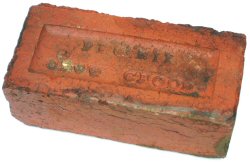
A buildings insurance policy covers the structure of a property and its permanent fixtures and fittings such as baths and toilets, fitted kitchens and bedroom cupboards. Interior decorations are covered also. Buildings insurance usually extends to include outbuildings such as garages, greenhouses and garden sheds, but depending on your policy boundary walls, fences, gates, paths, drives and swimming pools may not be covered.
Buildings insurance is based on the amount it would cost to rebuild your home. Not the purchase price or the council tax valuation band.
The re-build figure is usually lower than the purchase price.
There are a number of events that buildings insurance normally covers. These are often referred to as insured perils. Most policies will cover damage to your home by;
- Fire, explosion, lightning or earthquake
- Subsidence heave or landslip
- Storm and flood
- Theft or attempted theft
- Escape of water from tanks or pipes
- Falling trees or branches
- Breakage or collapse of television, radio signal or satellite apparatus
- Riot, civil commotion, strikes, labour or political disturbances
- Impact by aircraft, other aerial devices and vehicle or animal
- Escape of oil from heating systems
- Underground pipes and cables – supplying gas, electricity, oil or water as well as sewage pipes are insured against accidental damage. They are not insured against wear and tear.
- Glass – In doors, windows and skylights is covered against breakage together with baths, washbasins and WCs.
Contents Insurance Cover

Contents insurance covers your household goods and personal belonging in the home, in your outbuildings, even your garden (all replaced as new) against;
- Fire, Storm, Vandalism and theft
- Freezer contents
- Replacement keys
- Contents temporarily removed
- Personal Liability
- Extended personal possession cover available
Please note that the information provided is of a general nature only and for more detailed advice on what you are covered for you must refer to your policies.